Ever stare into the fridge after a long day, dreaming of restaurant flavors but dreading the cleanup? I do this all the time. This Chicken Caprese Skillet is my brilliant solution. It delivers those classic Italian tastes of sweet tomato, creamy mozzarella, and fragrant basil in one pan, in about 30 minutes. The secret isn’t complicated, it’s about letting a simple balsamic glaze work its magic.
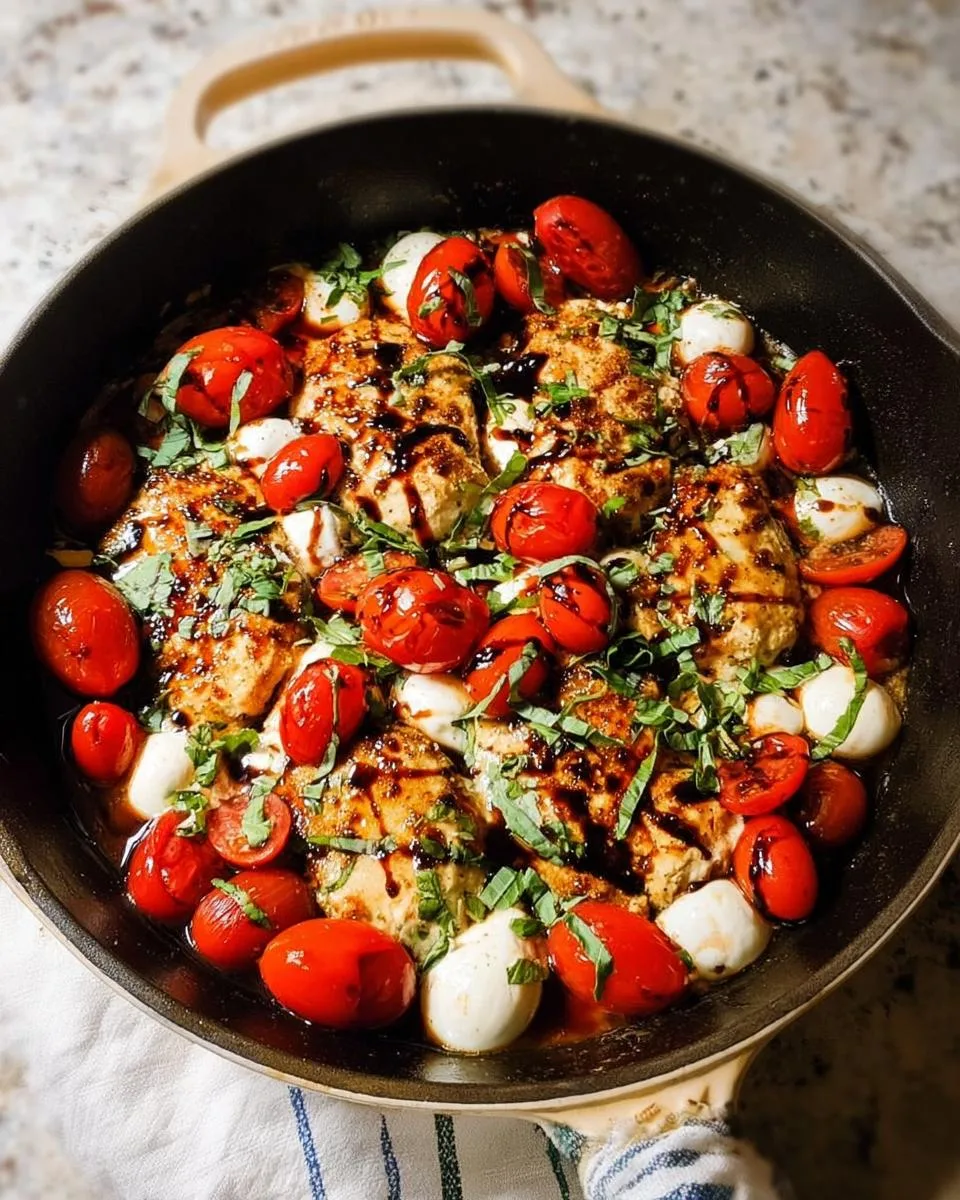
As a home cook who lives for efficient, impressive dinners, this recipe is a true lifesaver. It turns basic ingredients into a vibrant, satisfying meal that feels like a hug on a plate. My family goes quiet when this hits the table, and that’s the best compliment. Let’s walk through how it all comes together.
Table of Contents
Why You’ll Love This Chicken Caprese Skillet
Once you try this recipe, I promise it will earn a permanent spot in your dinner rotation. Here’s exactly why.
- One-Pan Wonder: From the seared chicken to the saucy tomatoes, everything happens in your trusty skillet. You get a complete meal with just one pan to wash. Maximum flavor meets minimal cleanup.
- Ready in 30 Minutes: Seriously, it’s faster than waiting for delivery. From the moment you pull out your cutting board to sitting down to eat, it’s about half an hour. It’s my secret weapon for those “what’s for dinner?!” nights.
- Restaurant-Quality at Home: That drizzle of sweet, tangy balsamic glaze over melted fresh mozzarella? It feels fancy. It tastes like a treat. But you made it yourself for a fraction of the cost.
- Versatile and Customizable: Not a fan of red onion? Swap it. Want to use chicken thighs instead? Go for it. This recipe is a friendly framework, not a strict rulebook. I’ll share my favorite twists later.
- Nutrient-Packed and Satisfying: With lean protein from the chicken and fresh, juicy tomatoes, this is a meal that truly satisfies. It’s bright, flavorful, and leaves everyone at my table feeling good and full.
It’s the kind of simple, stunning dinner that makes busy weeknights feel a little more special.
Ingredients You’ll Need
Gathering your ingredients is the first step to a fantastic Chicken Caprese Skillet. I love how this recipe uses simple, fresh components that come together to create something truly special. Here is your straightforward shopping list, broken down into easy groups.
- For the Balsamic Glaze:
- ½ cup balsamic vinegar: (A decent, affordable bottle is perfect. It simmers down into a rich, syrupy glaze.)
- 1 tablespoon honey: (This balances the vinegar’s sharpness with a touch of sweetness. Pure maple syrup is a great substitute if you need it.)
- For the Chicken:
- 4 boneless, skinless chicken breasts (about 1.5 lbs total): (Pounding them to an even ½-inch thickness is my non-negotiable tip for juicy, evenly cooked chicken every time.)
- 1 teaspoon kosher salt, divided: (We use it in stages to season the chicken and the tomatoes.)
- ½ teaspoon black pepper, divided:
- 2 tablespoons olive oil, divided: (For searing the chicken and sautéing the veggies.)
- For the Skillet:
- 1 small red onion, diced: (It adds a mild, sweet crunch.)
- 4 cloves garlic, minced:
- 2 pints cherry or grape tomatoes, halved: (Halving them is key. It helps them break down faster and release their sweet juices into the sauce.)
- ½ teaspoon dried thyme: (Or use 1 teaspoon of fresh thyme leaves if you have them.)
- 4 ounces fresh mozzarella pearls: (These little balls melt beautifully. No pearls? Tear a 4-ounce ball of fresh mozzarella into small pieces.)
- Fresh basil for garnish: (This final touch brings that classic, fragrant Caprese flavor.)
With these ingredients prepped and ready, you are just minutes away from a vibrant, delicious meal. Let’s get cooking.
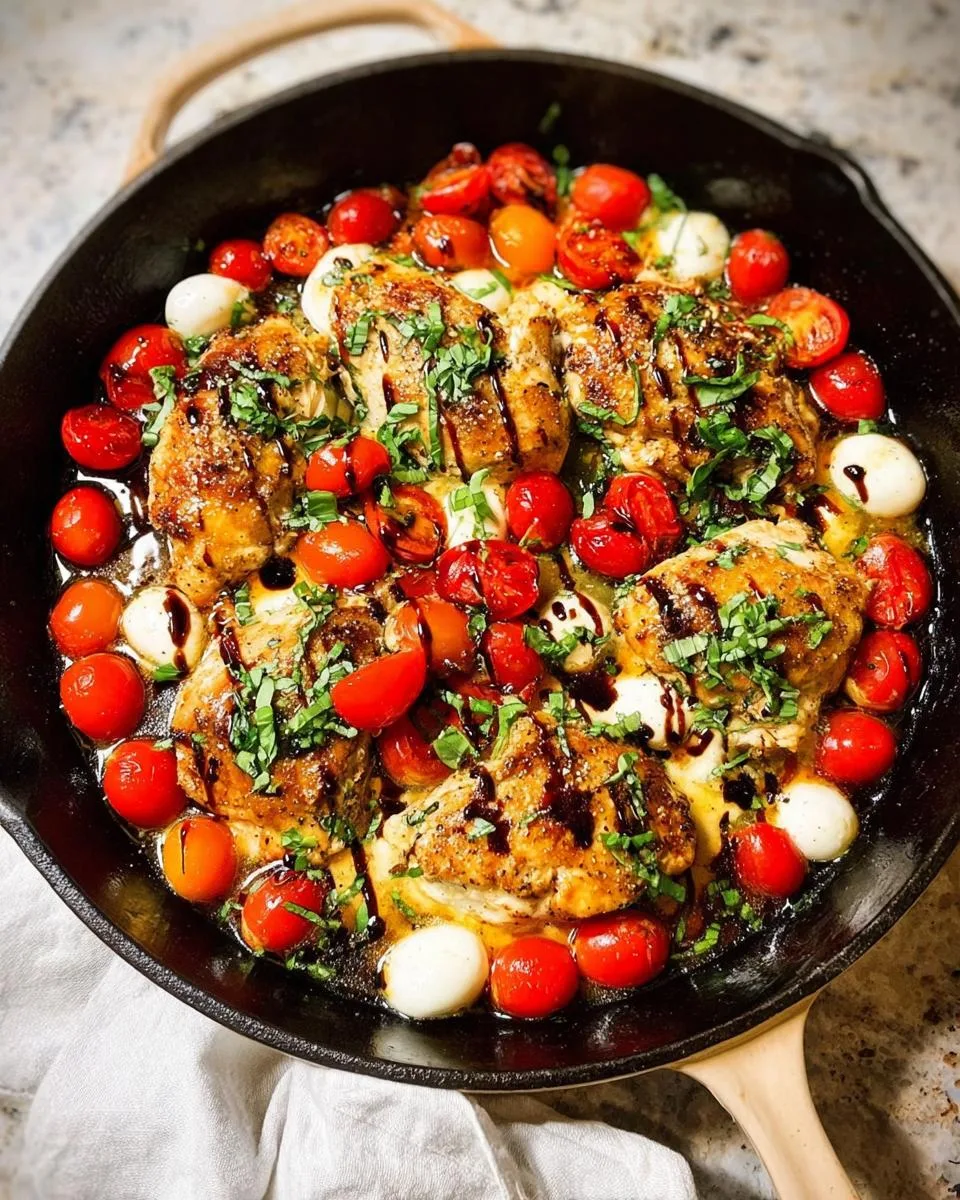
How to Make a Chicken Caprese Skillet
This is where the magic happens. I will walk you through each step, just like I would if we were cooking together in my kitchen. Follow these simple steps for a perfect result every time.
Step 1: Make the Balsamic Glaze
Start your balsamic glaze first. It needs time to simmer and thicken while you work on the chicken. Combine the vinegar and honey in a small saucepan. Place it over medium-low heat. Let it simmer gently for about 12 to 15 minutes. Do not let it boil rapidly. Stir it occasionally. You will know it is ready when the liquid reduces by about half. It should coat the back of a spoon in a syrupy layer. The glaze will thicken a bit more as it cools. Set it aside once it is done.
Step 2: Prep and Sear the Chicken
Place your chicken breasts between two sheets of plastic wrap or parchment paper. Gently pound them with a rolling pin or the flat side of a meat mallet. Your goal is an even ½-inch thickness. This ensures they cook uniformly. Season both sides generously with most of the salt and pepper.
Heat one tablespoon of olive oil in your large skillet over medium-high heat. When the oil is shimmering, add the chicken. Cook for 4 minutes on the first side until beautifully golden. Flip and cook for another 4 minutes.
The internal temperature should reach 165°F. Use an instant-read thermometer for accuracy. Transfer the cooked chicken to a plate and loosely cover it with foil.
Step 3: Sauté the Aromatics and Tomatoes
Reduce the skillet heat to medium. Add the remaining tablespoon of olive oil. Toss in your diced red onion. Cook it for about 5 minutes, stirring now and then. The onion should become soft and translucent. Now add the minced garlic. Cook for just 30 seconds until you smell that wonderful fragrance. Do not let it brown.
Add your halved tomatoes, dried thyme, and the rest of the salt and pepper. Increase the heat back to medium-high. Cook for 3 to 4 minutes. The tomatoes will start to soften and their skins will wrinkle. They will release some of their sweet juices into the pan, creating a light sauce.
Step 4: Assemble and Melt the Cheese
Now, bring the chicken back home. Nestle the seared breasts right into the skillet, among the juicy tomatoes. Scatter the fresh mozzarella pearls over everything. Cover the skillet immediately with a lid or a piece of aluminum foil. Remove the skillet completely from the heat.
Let it sit, covered, for 2 to 3 minutes. The residual heat in the pan will gently melt the cheese into soft, creamy pools. This method prevents the cheese from becoming rubbery and keeps the chicken perfectly juicy.
Step 5: Glaze and Serve
Uncover your beautiful skillet. Grab that balsamic glaze you made earlier. Drizzle it generously over the entire dish. The sweet, tangy syrup will glisten over the melted cheese and tomatoes. Finish by tearing fresh basil leaves over the top for that final burst of flavor. Serve your Chicken Caprese Skillet immediately, right from the pan, for a warm, rustic presentation.
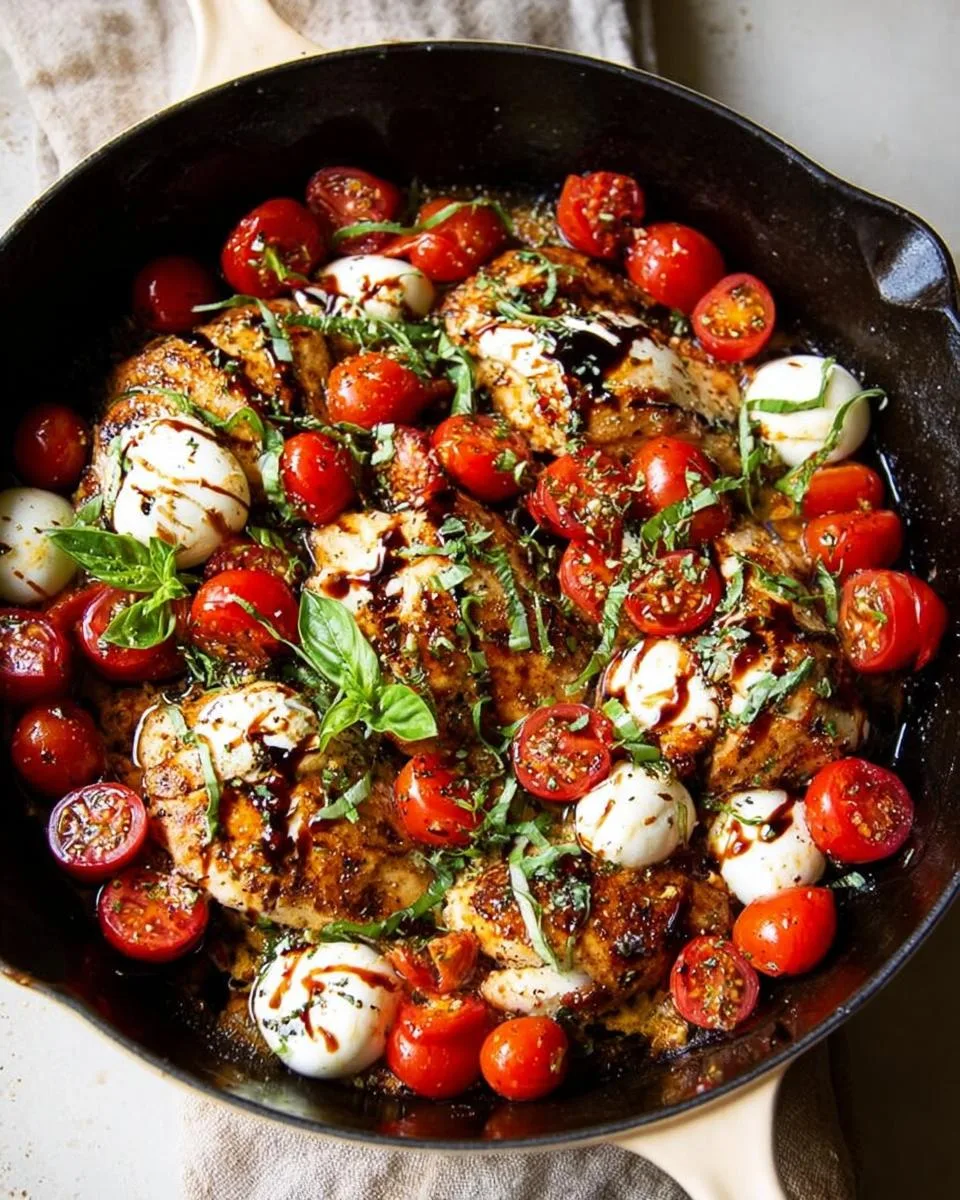
Pro Tips for the Best Chicken Caprese Skillet
These little tricks are what transform a good dinner into a great one. They are the secrets I learned through trial and error in my own kitchen.
- Pound the Chicken Evenly: This is the single most important step. An uneven chicken breast means dry, tough edges and an undercooked center. Aim for that uniform ½-inch thickness across the entire piece. It guarantees juicy, perfect chicken every single time.
- Trust Your Thermometer: Do not guess when the chicken is done. An instant-read thermometer is your best friend. Pull the chicken from the pan the moment it hits 165°F at the thickest part. It will carry over to a safe, succulent finish.
- Simmer, Don’t Boil the Glaze: A gentle simmer is key. A rapid, rolling boil can scorch the honey and make the glaze taste bitter. It is ready when you drag a spoon through it and the path stays clear for a second before filling in.
- Pick Sweet, Ripe Tomatoes: The sauce relies on the tomatoes’ natural sweetness. In summer, use whatever is freshest. In winter, seek out the sweetest cherry or grape tomatoes you can find. Their flavor makes all the difference.
- Melt the Cheese Off the Heat: This is my favorite trick. After you add the mozzarella, cover the skillet and take it off the burner. The trapped residual heat melts the cheese gently into soft, creamy pools without making it tough or greasy.
Follow these tips, and your skillet will be absolutely foolproof. Now, let’s talk about the few common pitfalls to sidestep completely.
Common Mistakes to Avoid
We have all been there. A simple misstep can change a dish. Knowing these common pitfalls for a Chicken Caprese Skillet will set you up for flawless success every time.
- Skipping the Pounding. Chicken breasts are naturally uneven. The thin end cooks fast and dries out while the thick center stays raw. The fix is simple. Always take a minute to pound them to an even ½-inch thickness. It is the only way to guarantee perfectly cooked chicken from edge to edge.
- Overcooking the Chicken. Chicken continues to cook from residual heat after you take it out of the pan. If you wait until it looks totally done in the skillet, it will be dry on your plate. The fix is to remove it the instant your thermometer reads 165°F. It will be perfectly juicy.
- Adding Cheese Over Direct High Heat. High, direct heat makes fresh mozzarella tough, rubbery, and it can separate into oily pools. The fix is to always add the cheese at the very end. Take the skillet off the heat, scatter the cheese, cover it, and let the gentle ambient heat do the melting. It takes just two minutes.
- Using a Thin, Runny Balsamic. If your glaze has not reduced enough, it will be thin and vinegary. It will water down your beautiful skillet instead of coating it. The fix is to simmer it patiently. It is ready when it thickly coats the back of a spoon and looks syrupy, about 12 to 15 minutes.
Avoid these easy traps, and your skillet dinner will be absolutely perfect. Now, let’s have some fun with variations.
Delicious Variations
One of my favorite things about this Chicken Caprese Skillet is how easily it adapts. Think of the recipe as a friendly template. Here are a few simple twists I love to make depending on what I have in the fridge or what my family is craving.
- Use Chicken Thighs: Swap the breasts for boneless, skinless thighs. They are more forgiving because they have a bit more fat. They stay incredibly juicy and flavorful, even if you cook them a minute too long. Just sear them for about 5-6 minutes per side.
- Add Greens: Want to sneak in more veggies? Right after the tomatoes soften, stir in a couple of big handfuls of fresh baby spinach or arugula. Let it wilt for just one minute in the hot pan before you add the chicken back. It adds a wonderful color and fresh taste.
- Herb Swap: If you are not a fan of thyme, try a different herb. Fresh oregano gives a beautiful, earthy flavor. You can also skip the dried herb altogether and just use extra fresh basil at the end for a pure, classic Caprese taste.
- Creamy Twist: For a richer, saucier dish, stir two or three tablespoons of heavy cream or a spoonful of your favorite pesto into the tomatoes right after they soften. It creates a luxurious, velvety sauce that coats everything beautifully.
Do not be afraid to make it your own. Cooking should be fun, not rigid. Next, let’s talk about the best ways to serve your masterpiece.
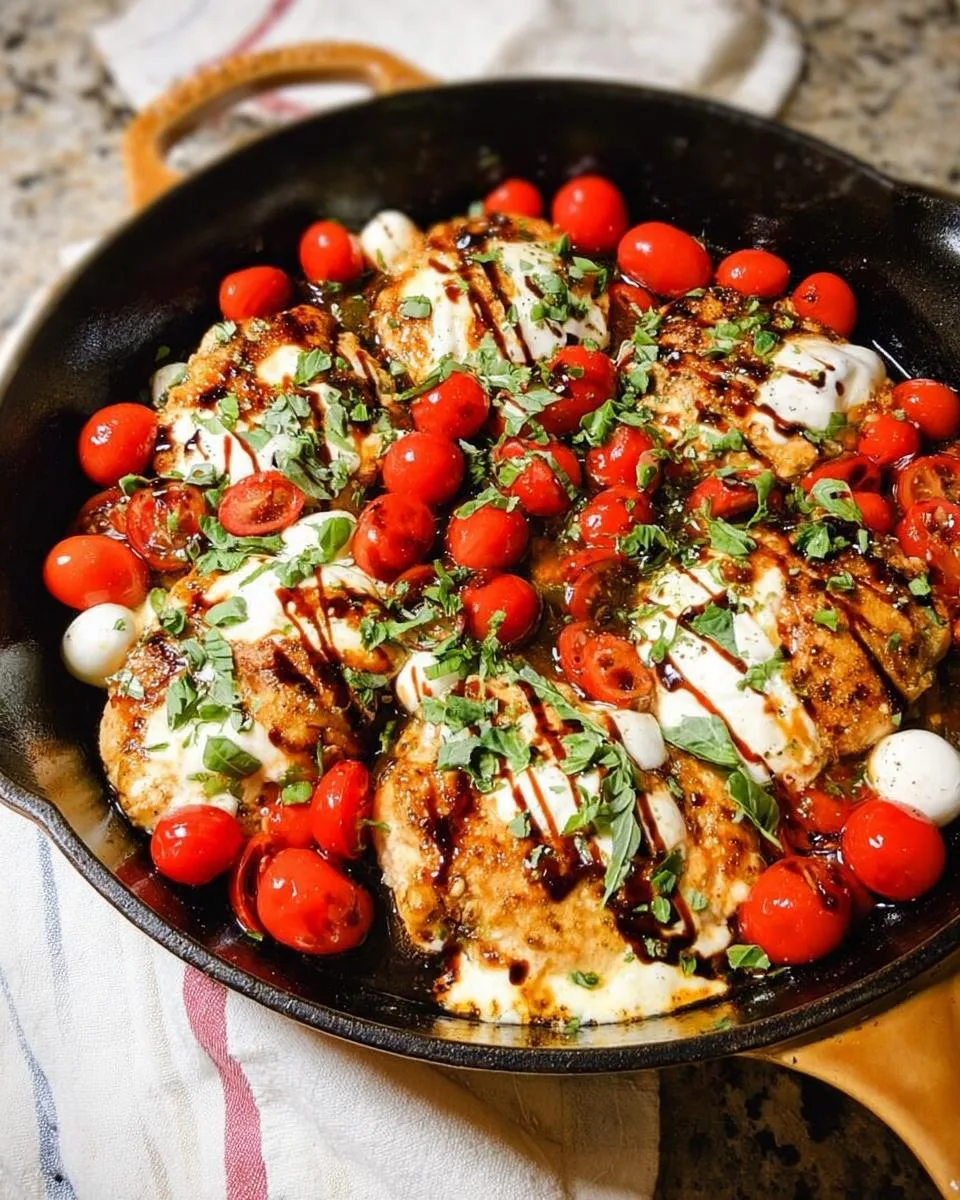
Serving Suggestions
This Chicken Caprese Skillet is a complete meal all on its own, but I love how it plays with other dishes. Here are my favorite, real-life ways to serve it for any occasion.
- For a Light, Fresh Meal: Serve a chicken breast with those juicy tomatoes right over a big bed of simple mixed greens or arugula. The warm sauce acts as a delicious, light dressing. A classic Caesar salad on the side is another perfect match.
- To Soak Up Every Drop of Sauce: You will not want to waste a bit of that tomato-balsamic goodness. A few slices of warm, crusty garlic bread or toasted ciabatta are essential for dipping. My family fights over the last piece to mop up the pan.
- With a Cozy, Hearty Side: On cooler nights, pair it with something comforting. A scoop of creamy polenta, fluffy mashed potatoes, or a portion of buttery orzo pasta makes the meal incredibly satisfying. The sauce clings to pasta beautifully.
- For Easy Summer Entertaining: This skillet is a stunning centerpiece for a cookout or dinner party. Carry the whole pan right to the table. Serve it alongside grilled zucchini or asparagus and a bottle of chilled Pinot Grigio. It feels elegant with zero stress.
No matter how you serve it, this dish brings everyone to the table with a smile. Now, let’s answer a few common questions.
FAQs About Chicken Caprese Skillet
Can I make this Chicken Caprese Skillet ahead of time?
Yes, you can do some prep ahead. Make the balsamic glaze and store it in a jar. You can also pound and season the chicken, keeping it covered in the fridge. For the best texture, cook and assemble the full dish just before you plan to eat. The fresh tomatoes can become a bit soft and watery if they sit cooked for too long.
What if I don’t have an oven-safe skillet?
That is completely fine. Follow the recipe as written. After you add the cheese in Step 4, simply cover the skillet and place it over the lowest possible heat on your stovetop for 2 to 3 minutes. Keep a close eye on it. The gentle heat will melt the cheese without overcooking the chicken or tomatoes.
How do I store and reheat leftovers?
Store any leftovers in an airtight container in the refrigerator for up to 3 days. To reheat, warm it gently in a covered skillet over low heat with a tiny splash of water. You can also use the microwave. Reheat in short bursts to prevent the chicken from becoming tough and dry.
Can I use a different type of cheese?
Fresh mozzarella is key for that authentic, creamy Caprese melt. Shredded low-moisture mozzarella will work in a pinch, but it will not give you the same soft, luxurious texture. I do not recommend a very hard cheese like Parmesan for melting here.
What are the nutrition facts for this recipe?
Nutritional values can vary. A general estimate per serving is about 419 calories, 18g fat, 18g carbs, and 42g protein. For the most accurate count for your meal, I recommend using an online calculator with the exact brands and amounts you use.
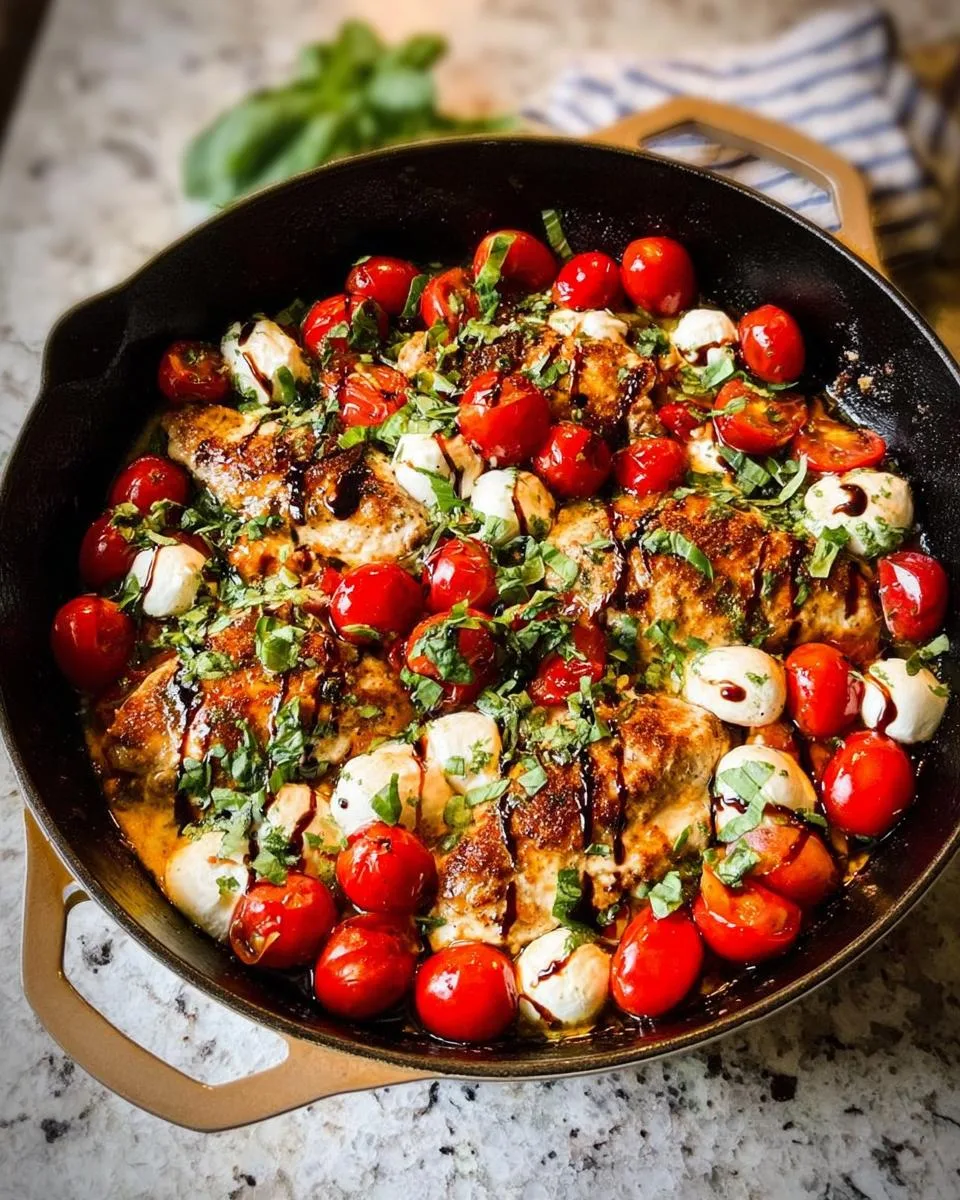
Your New Go-To Weeknight Feast
And that is your new secret weapon. This Chicken Caprese Skillet proves you do not need complicated steps or a mountain of pans to create something truly special. One pan, about 30 minutes, and simple ingredients transform into a meal that feels like a celebration. It is the kind of recipe that builds your confidence in the kitchen and brings everyone running to the table.
I would love to hear how your skillet turns out. Leave a comment below and tell me all about it. Did your family go quiet too? For more easy, family-friendly dinner ideas that never sacrifice flavor, follow me on Pinterest. Now, go enjoy that sweet, tangy, cheesy goodness.
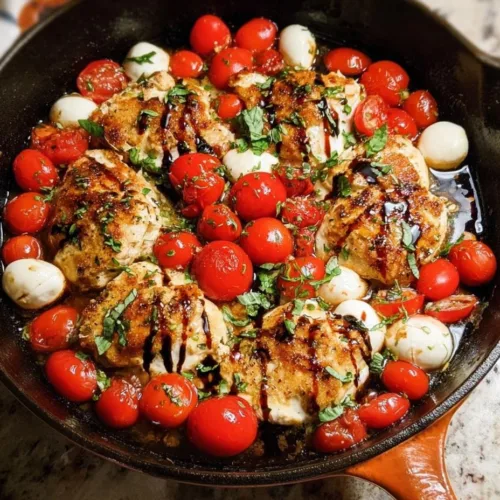
Chicken Caprese Skillet
Equipment
- small saucepan
- Large oven-safe skillet
Ingredients
- ½ cup balsamic vinegar
- 1 tablespoon honey
- 4 boneless, skinless chicken breasts about 24 ounces total
- 1 teaspoon kosher salt divided
- ½ teaspoon black pepper divided
- 2 tablespoons olive oil divided
- 1 small red onion diced
- 4 cloves garlic minced
- 2 pints cherry or grape tomatoes halved
- ½ teaspoon dried thyme
- 4 ounces fresh mozzarella pearls
Instructions
- In a small saucepan, combine the balsamic vinegar and honey. Bring to a simmer over medium-low heat and cook, stirring occasionally, until the mixture has reduced by about half and thickened to a glaze consistency, about 15 minutes. Set aside.
- While the glaze reduces, place the chicken breasts between sheets of plastic wrap and gently pound them to an even 1/2-inch thickness. Season both sides of the chicken with 3/4 teaspoon salt and 1/4 teaspoon pepper.
- Heat 1 tablespoon of olive oil in a large, oven-safe skillet over medium-high heat. Add the chicken breasts and cook for 4 minutes per side, until golden brown and cooked through. The internal temperature should reach 165°F. Remove the chicken to a plate and tent loosely with foil.
- Reduce the skillet heat to medium. Add the remaining 1 tablespoon of olive oil. Add the diced red onion and cook, stirring occasionally, until softened, about 5 minutes.
- Add the minced garlic to the skillet and cook for 30 seconds until fragrant.
- Add the halved tomatoes, dried thyme, remaining 1/4 teaspoon salt, and 1/4 teaspoon pepper to the skillet. Increase the heat to medium-high and cook until the tomatoes begin to break down slightly, about 3 minutes.
- Return the chicken breasts to the skillet, nestling them among the tomatoes. Scatter the mozzarella pearls over the chicken and vegetables.
- Cover the skillet and remove from heat. Let stand for 2 minutes to allow the mozzarella to melt.
- Drizzle the reserved balsamic glaze over the chicken, tomatoes, and mozzarella. Garnish with fresh basil if you like. Serve immediately.