Ever crave that perfect, better-than-takeout Chinese food? You know the kind, with bold flavor that you can make in your own kitchen. This classic Kung Pao Chicken recipe is your answer. It delivers the signature sweet, savory, spicy, and nutty bite you love, all in about 35 minutes.
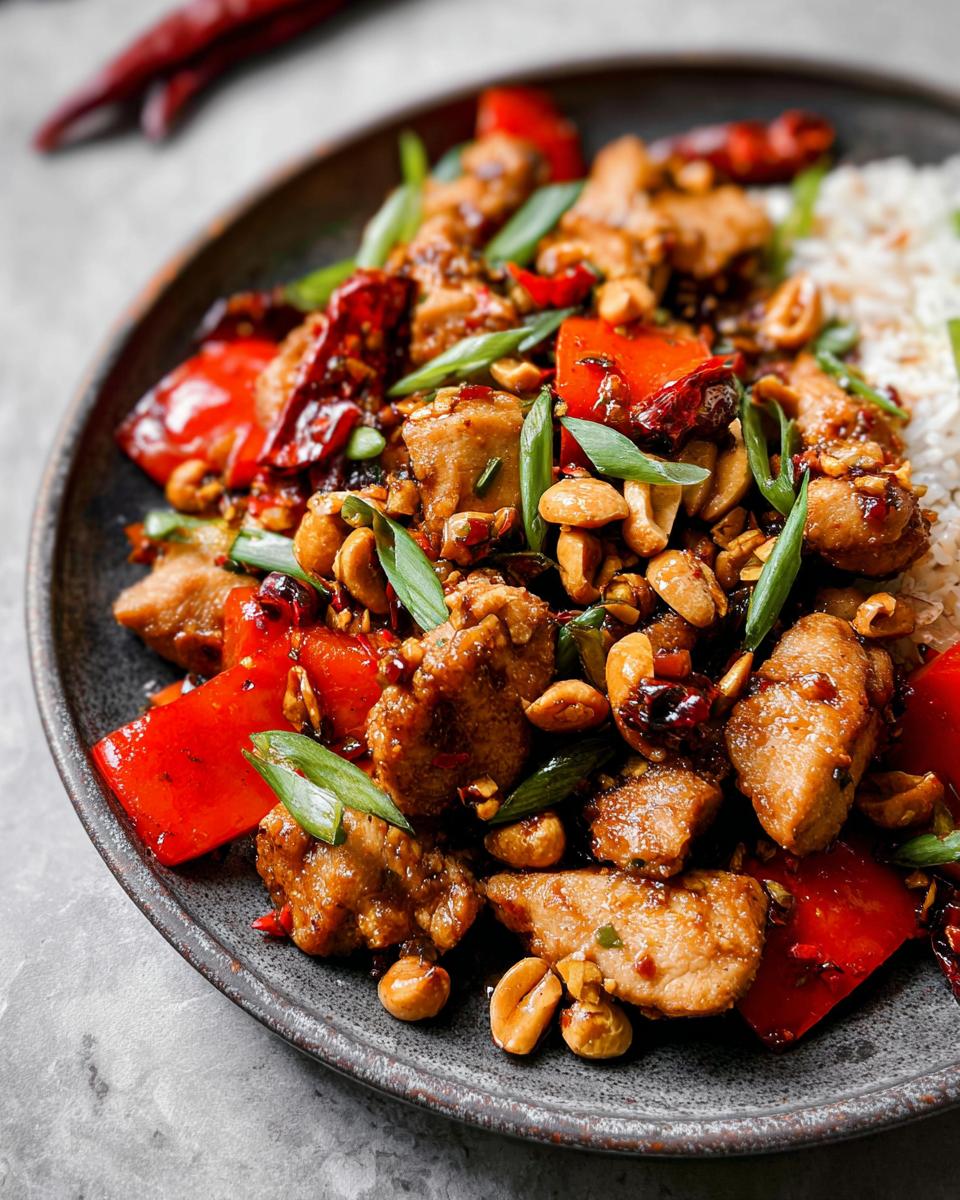
I spent years testing this dish to get it just right. The secret to great Kung Pao Chicken isn’t a long list of exotic ingredients. It’s about balancing a vibrant sauce and using a simple trick for incredibly tender chicken. This is the version my family requests most often.
Let’s break it down step by step. You’ll see just how easy it is to make this restaurant favorite at home.
Table of Contents
Why You’ll Love This Kung Pao Chicken
Once you make this Kung Pao Chicken at home, you might just break up with your usual takeout spot. It’s that good. This recipe is my go-to for so many reasons, and I think you’ll find it becomes a favorite in your kitchen, too.
Here’s exactly why you’ll love this authentic Kung Pao Chicken:
- Fresher & Faster: It’s on the table in about 35 minutes, which is often quicker than waiting for delivery. Plus, you know exactly what’s in it.
- Your Kitchen, Your Rules: You have complete control. Love it fiery? Add more red pepper flakes. Watching sodium? We use low-sodium soy sauce. It’s your perfect version.
- Juicy Chicken Every Time: The simple cornstarch and egg white marinade is a game-changer. It creates a velvety coating that locks in moisture, guaranteeing tender bites.
- The Sauce is Everything: After countless tests, this sauce is perfectly balanced. It’s savory from the soy, has a gentle sweetness, a tangy kick from vinegar, and just the right warmth. It clings to every piece beautifully.
- True Weeknight Hero: It’s a one-pan wonder. From marinade to plate, everything happens in your wok or skillet, making cleanup a breeze.
- Authentic Taste, Simplified Method: We use real techniques, like toasting the peanuts with the chili flakes, but keep the steps clear and manageable for any cook.
This dish is a flavor powerhouse that’s surprisingly simple to master. Let’s gather your ingredients.
Ingredients You’ll Need
Gathering your ingredients before you start is the secret to a smooth, stress-free stir-fry. Having everything measured and chopped means you can focus on the fun part, the cooking. Here’s your simple shopping list, broken down into three easy parts.
For the Chicken & Marinade:
- 1.5 pounds boneless, skinless chicken thighs, cut into 1-inch pieces (Note: Thighs are my go-to for their juicy, forgiving texture, but chicken breast works in a pinch. Just watch the cooking time closely.)
- 2 tablespoons cornstarch (Note: This isn’t just for thickening. It creates a light crust on the chicken for better browning and helps the sauce cling later.)
- 1 tablespoon low-sodium soy sauce
- 1 tablespoon rice vinegar
- 1 large egg white (Note: This is the magic for tender chicken. It helps the cornstarch form a velvety coating that seals in moisture.)
For the Stir-Fry:
- 1/4 cup dry roasted peanuts (Note: I prefer unsalted to control the saltiness. Cashews make a delicious, rich substitute if you have them.)
- 2 tablespoons vegetable oil, divided
- 1 teaspoon red pepper flakes (This is your heat control. Start here and add more later if you want it spicier.)
- 1 teaspoon grated fresh ginger (Note: Fresh ginger gives a bright, zingy base. In a real pinch, 1/4 teaspoon of dried ground ginger can work.)
- 2 cloves garlic, minced
- 1 red bell pepper, chopped into 1-inch pieces
- 3 green onions, white and green parts separated and thinly sliced
For the Kung Pao Sauce:
- 1/4 cup low-sodium chicken broth (or water)
- 3 tablespoons low-sodium soy sauce
- 2 tablespoons rice vinegar
- 2 teaspoons granulated sugar
- 1 teaspoon red chili paste with garlic (like sambal oelek) or sriracha
- 1 teaspoon sesame oil (Note: Don’t skip this. It’s the finishing touch that adds that authentic, nutty aroma you love in restaurant dishes.)
A quick substitution tip, for a gluten-free Kung Pao Chicken, simply swap the soy sauce for tamari. Now, with your mise en place ready, let’s get cooking.
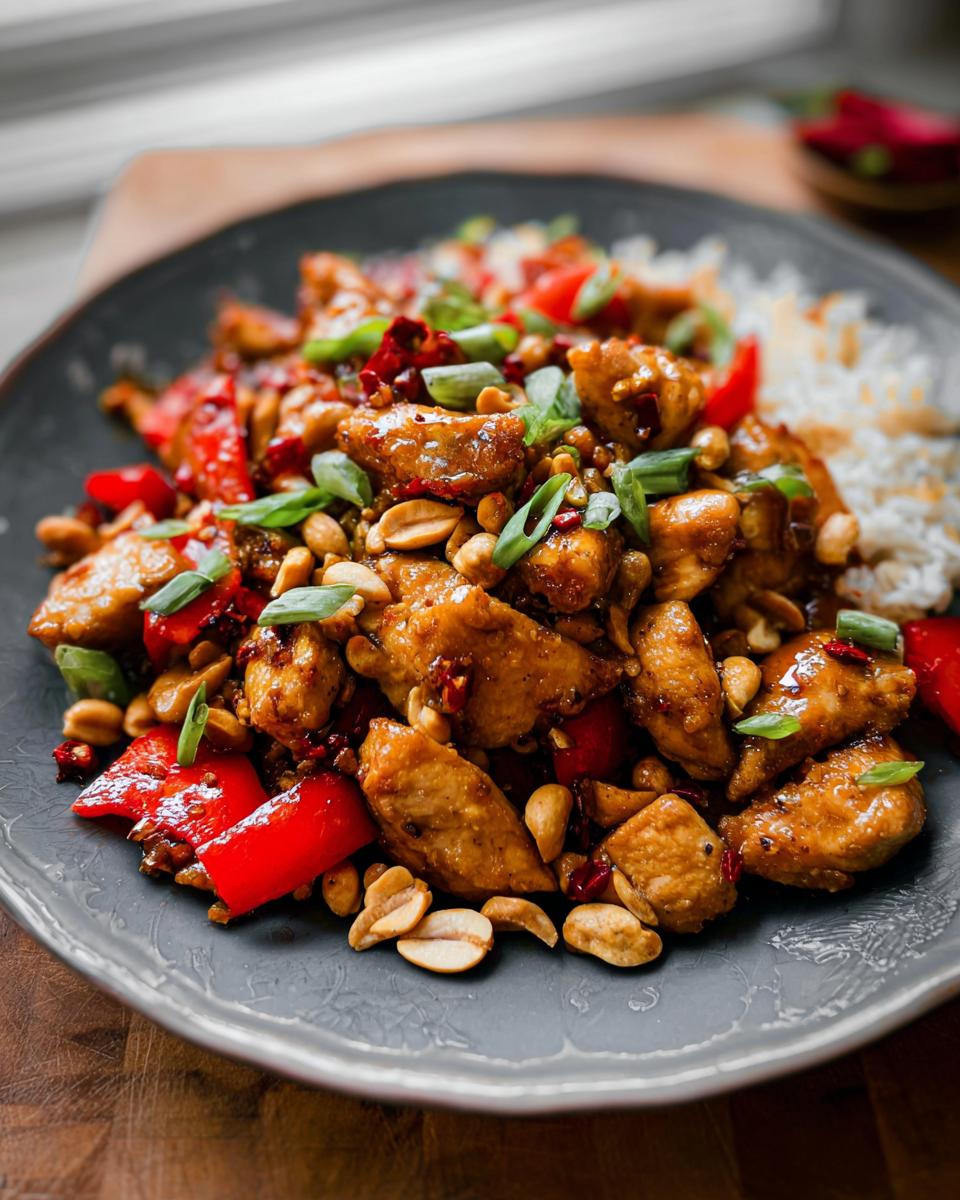
How to Make Kung Pao Chicken
Ready for the fun part? Making this Kung Pao Chicken is a quick, sizzling dance in the pan. The key is having everything prepped before you start cooking. Once that flame is on, things move fast.
Step 1: Marinate the Chicken
Grab a medium bowl. Add your chicken pieces, 1 tablespoon of cornstarch, 1 tablespoon of soy sauce, 1 tablespoon of rice vinegar, and the egg white. Use your hands or a spoon to toss it all together. You want every single piece to look glossy and coated. Let this sit on the counter for at least 10 minutes. This short rest is what makes the chicken incredibly tender later.
Step 2: Prepare the Kung Pao Sauce
While the chicken rests, make your sauce. In a small bowl, whisk together the chicken broth, 3 tablespoons of soy sauce, 2 tablespoons of rice vinegar, sugar, chili paste, and sesame oil. Keep whisking until the sugar fully dissolves. Having this ready to go means no frantic searching for ingredients later.
Step 3: Toast the Peanuts and Chili Flakes
Place your wok or largest skillet over medium heat. Add 1 tablespoon of the vegetable oil. Once the oil is warm, add the peanuts and red pepper flakes. Stir them constantly for just 1 to 2 minutes. You’ll know they’re done when you smell a lovely, nutty fragrance. Be careful, they can burn quickly. Scoop them out into a small bowl and set them aside.
Step 4: Cook the Chicken
Turn the heat up to medium-high. Pour the remaining 1 tablespoon of oil into the hot pan. Add about half of your marinated chicken in a single layer. Do not crowd the pan. We want browning, not steaming. Let the chicken cook undisturbed for 2 to 3 minutes per side, until you see a golden-brown color. The chicken will be mostly cooked through. Transfer this batch to the bowl with the peanuts. Repeat with the second half of the chicken.
Step 5: Stir-Fry the Aromatics and Vegetables
All the fond in the pan is pure flavor. To it, add the grated ginger, minced garlic, the white parts of the green onions, and the chopped red bell pepper. Stir-fry everything for 2 to 3 minutes. The peppers should soften just a bit but still have a pleasant crunch. The garlic should smell amazing but not turn brown.
Step 6: Combine and Simmer
Now, bring it all together. Return the cooked chicken and the peanut mixture to the skillet. Give your prepared sauce a quick stir and pour it right over the top. Toss everything well to coat. Let it bubble and cook for another 2 to 3 minutes, stirring frequently. The sauce will thicken slightly and turn into a beautiful, glossy coating that clings to every piece.
Step 7: Final Garnish and Serve
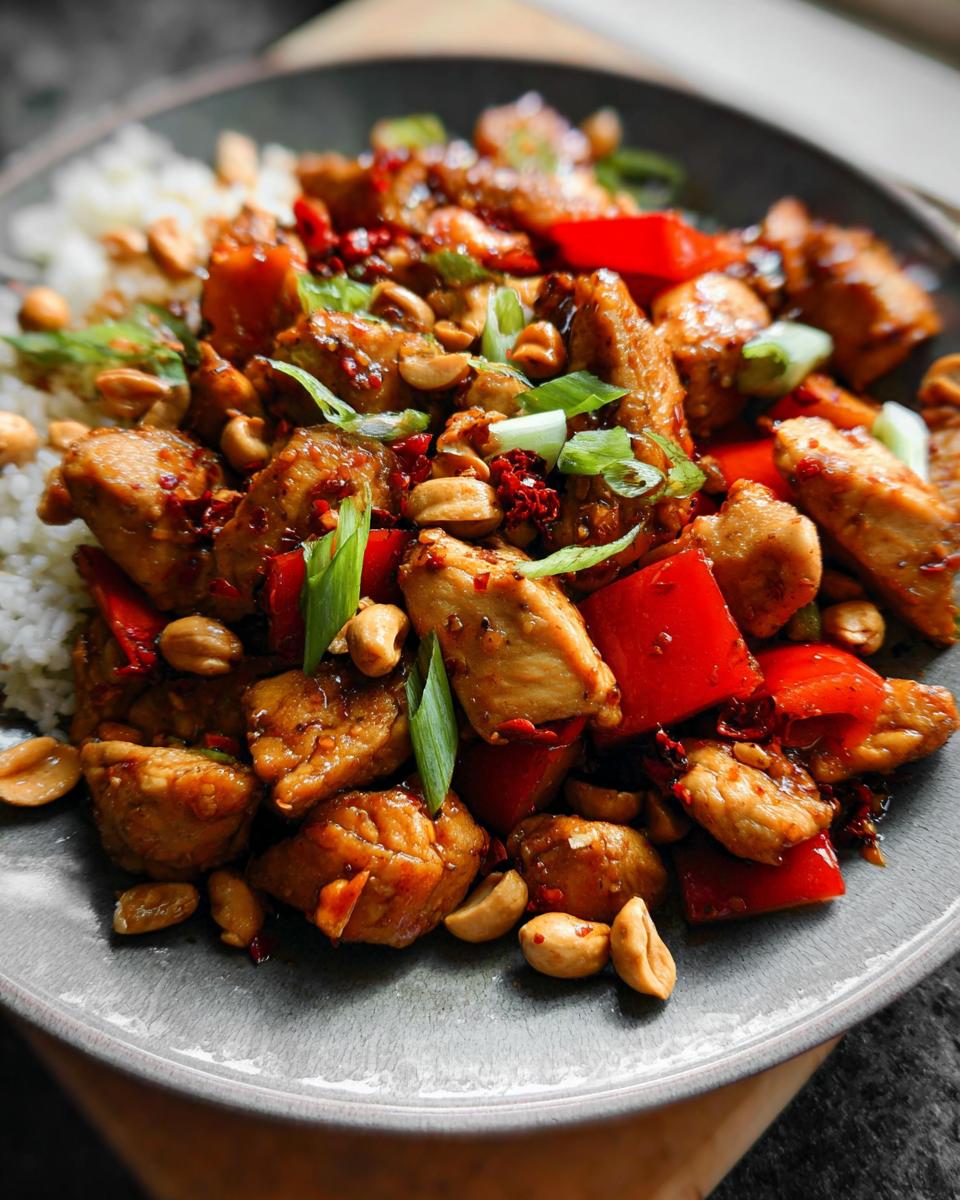
Take the skillet off the heat. Stir in the sliced green onion tops. This adds a fresh, crisp finish. Serve your Kung Pao Chicken immediately over a big bed of steamed rice. The contrast of the tender chicken, crunchy peanuts, and vibrant sauce is simply irresistible.
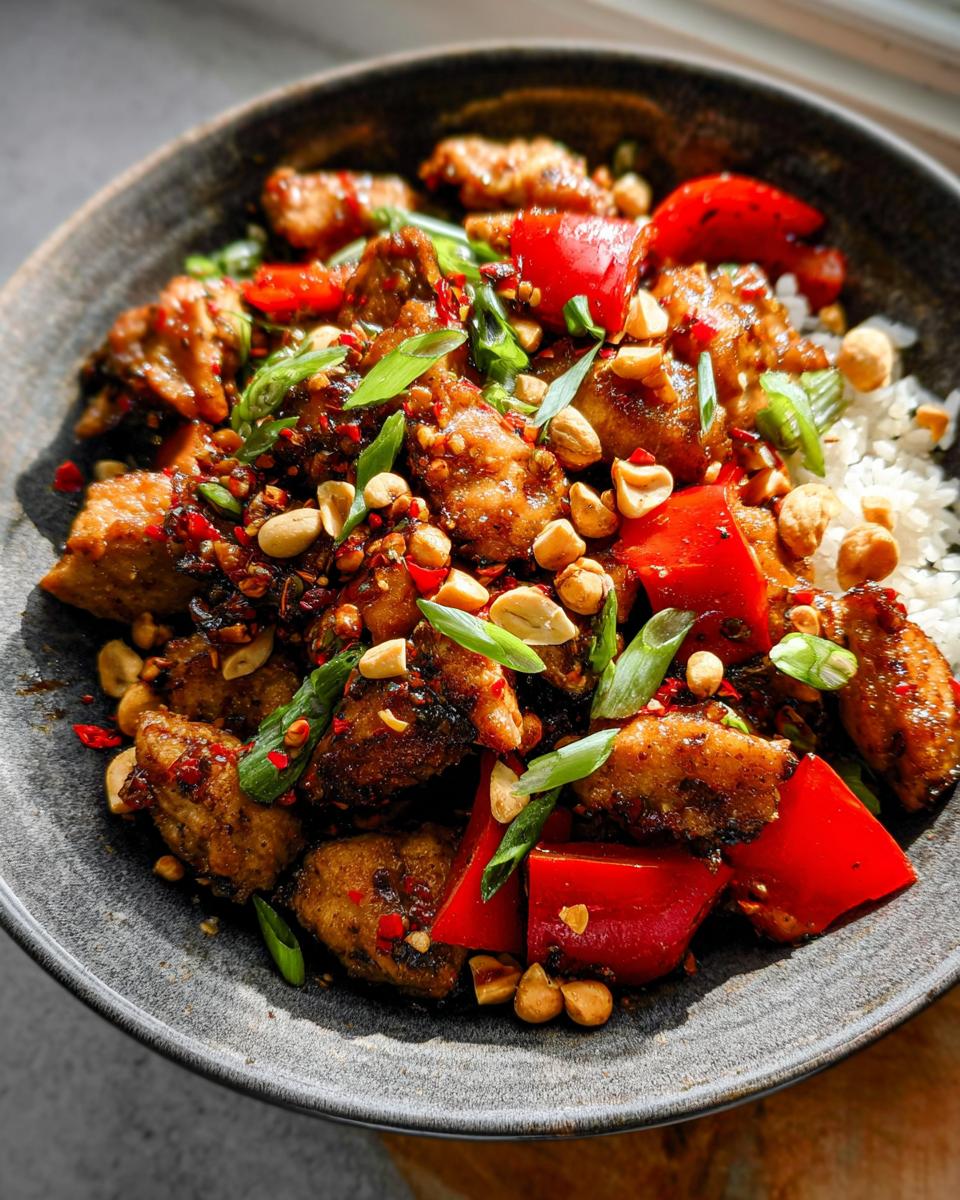
Pro Tips for the Best Kung Pao Chicken
A few simple tricks will take your stir-fry from good to absolutely incredible. These are the lessons I’ve learned from making this dish countless times.
- Mise en Place is Everything: Have every ingredient chopped, measured, and within arm’s reach before you heat the pan. Stir-frying is a fast, high-heat process, and there’s no time to stop and mince garlic.
- Get Your Pan Screaming Hot: A properly preheated wok or skillet is non-negotiable. To test, add a single drop of water; it should sizzle and evaporate instantly. This gives the chicken a quick sear for flavor, not a steam.
- Trust the Velveting: That cornstarch and egg white marinade is a classic Chinese “velveting” technique. It creates a protective layer that keeps the chicken juicy. Don’t rush the 10-minute rest. It makes all the difference.
- Master the Sauce Consistency: The sauce should coat the back of a spoon. If it seems too thin or watery at the end, make a quick slurry. Mix 1 teaspoon of cornstarch with 1 tablespoon of cold water, then stir it into the simmering dish for the last minute of cooking.
- Fresh Aromatics are Non-Negotiable: Use fresh ginger and garlic. The jarred stuff just doesn’t provide the same bright, punchy base that defines this dish. Grating the ginger releases more of its amazing flavor.
Follow these tips, and you’ll have a Kung Pao Chicken that rivals any restaurant.
Common Mistakes to Avoid
Avoiding a few simple pitfalls is the secret to perfect Kung Pao Chicken every single time. Here’s what to watch for.
- Crowding the Pan: Adding all the chicken at once drops the pan temperature and steams the meat. You’ll get pale, rubbery chicken instead of those golden-brown, flavorful pieces. Always cook in two batches for the best sear.
- Burning the Garlic and Ginger: These aromatics cook in less than a minute. If you add them to an empty, scorching hot pan, they’ll turn bitter and acrid in seconds. Always add them with the bell peppers after the chicken is out, so they just perfume the oil without burning.
- Using Old Peanuts: Stale, soft peanuts get lost in the dish. The toasting step is there for a reason. It revives their crunch and deep, nutty flavor. Always taste one before you start. If it’s not crisp and tasty, use a fresh batch.
- Overcooking the Vegetables: We want a bright crunch from the bell peppers. If you stir-fry them for more than 3 minutes, they become soft and lose their color. Cook them just until they start to soften at the edges but still have a bite.
Keep these tips in mind, and your stir-fry will be flawless.
Delicious Variations
This Kung Pao Chicken recipe is wonderfully forgiving. Feel free to make it your own based on what you love or what’s in your fridge. Here are a few of my favorite twists.
- Protein Swap: The sauce works with almost any protein. For shrimp, use large, peeled ones and cook them for just 1-2 minutes per side until pink. For extra-firm tofu, press it well, cube it, and toss it in the marinade. Thinly sliced beef sirloin cooks in about the same time as the chicken.
- Vegetable Boost: Want more color and crunch? Add broccoli florets or sliced zucchini when you stir-fry the bell peppers. For a classic touch, toss in a handful of canned, sliced water chestnuts in the final minute of cooking.
- Extra Spicy: If you love real heat, add 3-4 dried whole red chilies when you toast the peanuts. For a finishing kick, drizzle a teaspoon of chili oil over the dish just before serving.
- Nut-Free: No peanuts? No problem. Swap them for a couple tablespoons of toasted sesame seeds for a different crunch. You can also simply leave the nuts out entirely for a still-delicious, simplified version.
Don’t be afraid to experiment. The best part of cooking at home is making a dish that’s perfectly yours.
Serving Suggestions
This Kung Pao Chicken is a star on its own, but pairing it right turns a great meal into an unforgettable one. Here’s how I love to serve it up.
- The Classic Plate: Spoon it hot from the wok over a big bed of steamed jasmine rice. The fluffy grains are perfect for soaking up every last drop of that glossy, addictive sauce.
- For a Lighter Meal: Keep it low-carb and vibrant by serving it with cauliflower rice or a side of simple quinoa. The bold flavors of the chicken shine through beautifully.
- A Complete Chinese Spread: For a fun weekend dinner, make it part of a feast. Serve it alongside quick garlic sautéed bok choy or a refreshing cucumber salad with a rice vinegar dressing. The cool, crisp veggies balance the rich, spicy chicken perfectly.
- Easy Entertaining: This dish is a crowd-pleaser for casual get-togethers. Set the Kung Pao Chicken out in the center of the table with a big pot of rice, a bowl of store-bought egg rolls or potstickers for dipping, and let everyone dig in family-style.
No matter how you plate it, just be ready for seconds. This dish disappears fast.
FAQs About Kung Pao Chicken
Got questions? I’ve got answers. Here are the most common things people ask when making this Kung Pao Chicken recipe.
Can I use chicken breast instead of thighs?
Absolutely, you can. Chicken breast will work in a pinch. The key is to watch it closely. Since breast meat is leaner, it can dry out faster. I recommend cooking it for just 1 to 2 minutes per side, until it’s no longer pink in the center. For the juiciest results, stick with thighs, but breast is a perfectly fine swap.
How do I store and reheat leftovers?
Store any leftovers in an airtight container in the fridge for up to 3 days. To reheat, I prefer a skillet over medium heat with a tiny splash of water or broth. This gently warms it without overcooking the chicken. The microwave works too, just cover it and heat in short bursts, stirring in between.
Is this recipe gluten-free?
It sure can be. To make gluten-free Kung Pao Chicken, simply swap the soy sauce for tamari. Also, double-check your red chili paste or sriracha label to confirm it’s gluten-free. With those two easy swaps, you’re all set for a delicious gluten-free meal.
How do I know when the chicken is done cooking?
The chicken is perfectly cooked when it’s firm to the touch and no longer pink inside. A good visual cue is a golden-brown sear on the outside. If you’re unsure, you can always cut into one of the larger pieces to check. It should be opaque all the way through.
What are the calories/nutritional info?
One serving of this Kung Pao Chicken is approximately 450 calories. This is an estimate based on the specific ingredients I use. Nutritional values, like sodium or sugar content, can vary depending on the brands of soy sauce or broth you choose.
Your Takeout Favorite, Made at Home
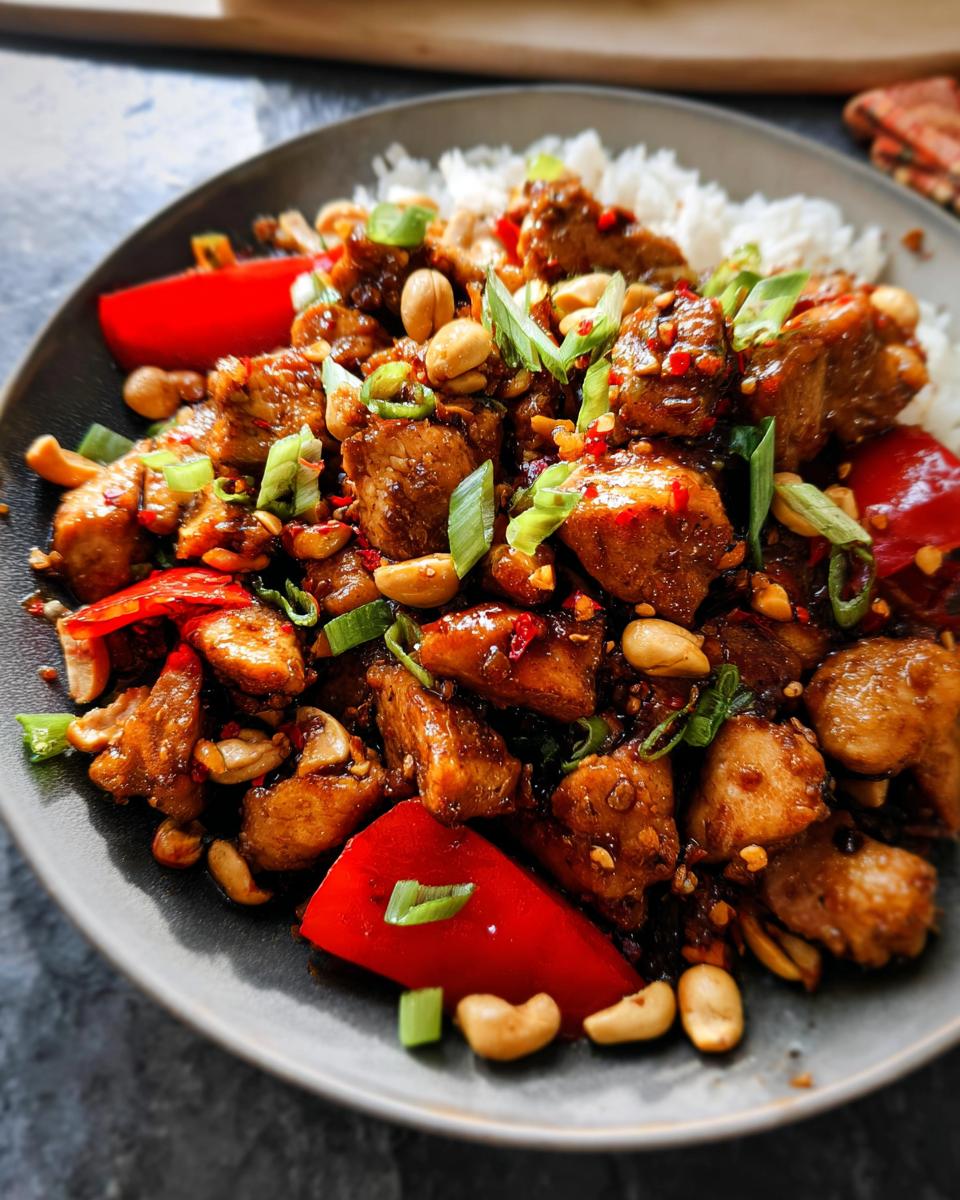
That’s it. You now have a recipe for Kung Pao Chicken that delivers big, bold flavor without a complicated process. It proves that the best takeout meals are often the easiest to make in your own kitchen. I truly hope this becomes a new weeknight hero for you.
When you give it a try, I’d love to hear how it turns out. Leave a comment below and tell me what you think. For more simple, family-friendly dinner ideas that actually work, come follow along on Pinterest. Happy cooking.
Kung Pao Chicken
Equipment
- Wok or large skillet
- medium bowl
- Small bowl
Ingredients
For the Chicken
- 1.5 pounds boneless, skinless chicken thighs cut into 1-inch pieces
- 2 tablespoons cornstarch
- 1 tablespoon low-sodium soy sauce
- 1 tablespoon rice vinegar
- 1 large egg white
- ¼ cup dry roasted peanuts
- 2 tablespoons vegetable oil
- 1 teaspoon red pepper flakes or more for extra heat
- 1 teaspoon grated fresh ginger
- 2 cloves garlic minced
- 1 red bell pepper chopped into 1-inch pieces
- 3 green onions white and green parts separated, thinly sliced
For the Kung Pao Sauce
- ¼ cup low-sodium chicken broth
- 3 tablespoons low-sodium soy sauce
- 2 tablespoons rice vinegar
- 2 teaspoons granulated sugar
- 1 teaspoon red chili paste with garlic or sriracha
- 1 teaspoon sesame oil
Instructions
- In a medium bowl, combine the chicken pieces with 1 tablespoon of cornstarch, 1 tablespoon of soy sauce, 1 tablespoon of rice vinegar, and the egg white. Toss to coat the chicken evenly and set aside to marinate for at least 10 minutes.
- While the chicken marinates, prepare the Kung Pao sauce. In a small bowl, whisk together the chicken broth, 3 tablespoons soy sauce, 2 tablespoons rice vinegar, sugar, chili paste with garlic, and sesame oil. Set the sauce aside.
- Heat 1 tablespoon of vegetable oil in a wok or large skillet over medium heat. Add the peanuts and red pepper flakes and stir-fry for about 1 to 2 minutes, until the peanuts are lightly toasted and fragrant. Remove the peanuts and red pepper flakes from the skillet and set them aside in a bowl.
- Add the remaining 1 tablespoon of vegetable oil to the hot skillet over medium-high heat. Add about half of the marinated chicken in a single layer. Cook for 2 to 3 minutes per side, until lightly browned and mostly cooked through. Remove the chicken from the skillet and set it aside with the peanuts. Repeat with the remaining chicken.
- Return the skillet to medium-high heat. Add the grated ginger, minced garlic, the white parts of the green onions, and the chopped red bell pepper. Stir-fry for 2 to 3 minutes, until the vegetables are tender-crisp.
- Return the cooked chicken and the reserved peanuts and red pepper flakes to the skillet. Pour the prepared Kung Pao sauce over everything. Stir well to coat.
- Continue to cook, stirring frequently, for another 2 to 3 minutes, until the sauce has thickened slightly and the chicken is fully cooked through. Stir in the green parts of the green onions just before serving.