Have you ever craved the incredible flavor of Thai street food but thought it was too complicated to make at home? Let me change your mind. This easy Thai Basil Chicken recipe brings that authentic, crave-worthy taste to your kitchen in under 30 minutes. It’s my secret weapon for busy weeknights when I need something fast, flavorful, and far better than takeout.
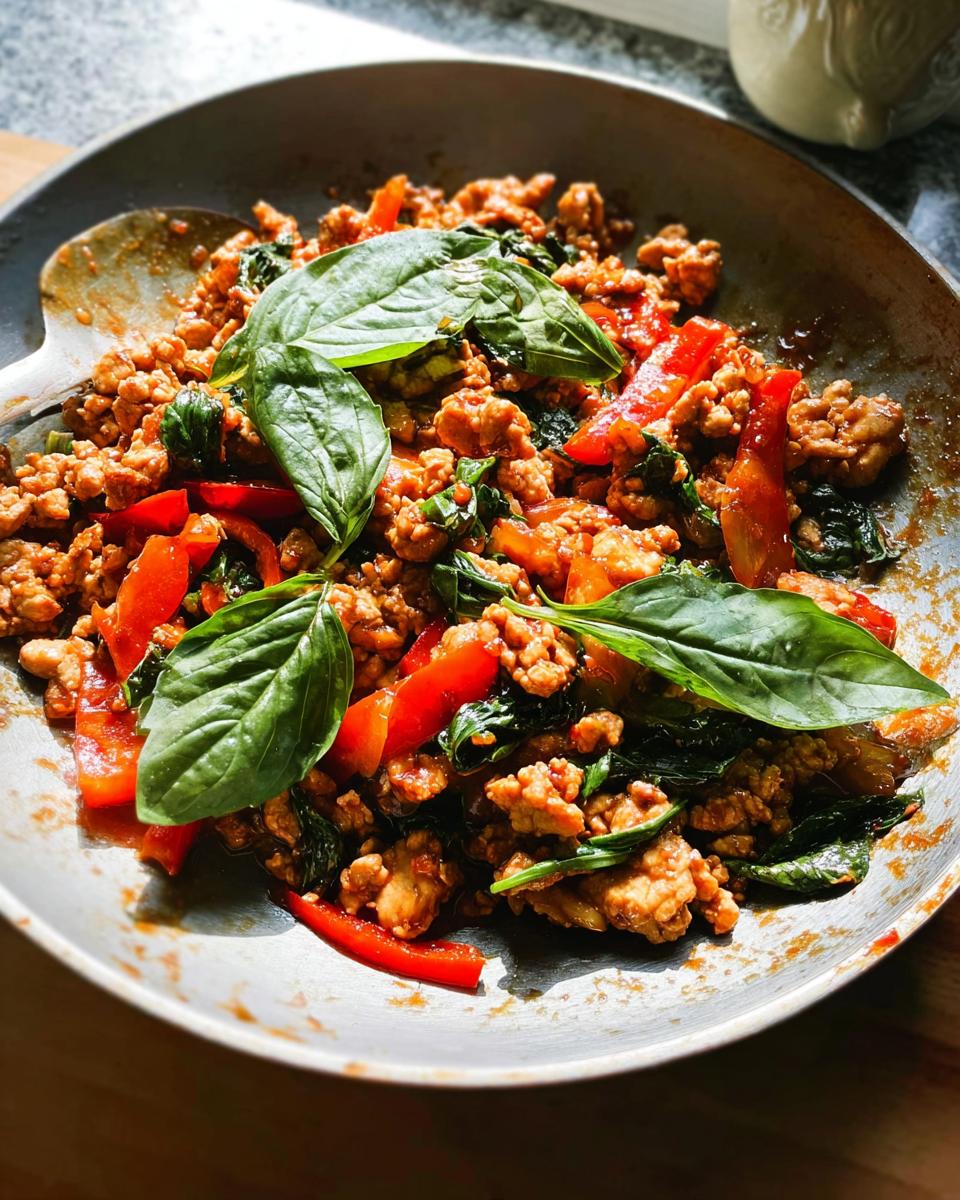
The secret to great Thai Basil Chicken isn’t a long list of hard-to-find ingredients. It’s about balancing savory, sweet, and spicy in one quick stir-fry. I spent weeks testing this version until it was just right. Now, it’s a family favorite that always gets empty plates. Let’s break it down step by step.
Table of Contents
Why You’ll Love This Thai Basil Chicken
This stir-fry is more than just a quick dinner. It’s a flavor explosion that will make you feel like a kitchen hero. Here’s exactly why it works so well for real life.
- Authentic Flavor, Easy Method: You get the classic savory, sweet, and spicy notes you love from takeout. The sauce, with fish sauce and oyster sauce, creates deep umami. You don’t need any special skills, just one pan and a good stir.
- Weeknight Hero: From fridge to table in under 30 minutes. I timed it making this after a long workday. While the rice cooks, you can have the stir-fry ready. It’s faster than delivery.
- Customizable Heat: My family has different spice tolerances. Start with 1 tablespoon of chili sauce for a mild kick. My husband always adds an extra spoonful to his bowl. You’re in full control.
- Uses Common Ingredients: Besides the fresh basil, you likely have soy sauce, garlic, and ginger already. Shallots add a gentle sweetness, but a small onion works too. No rare, expensive items required.
- Versatile Protein: I use ground chicken because it cooks fast and soaks up sauce beautifully. But if you have chicken breasts or ground pork, use them. The recipe adapts to what’s in your fridge.
This recipe delivers restaurant-quality taste on a tight schedule. It’s the kind of meal you’ll make again next Tuesday.
Ingredients You’ll Need
This flavorful stir-fry comes together with simple ingredients. Here’s what you need. Having everything ready before you heat the pan makes the process smooth and stress free.
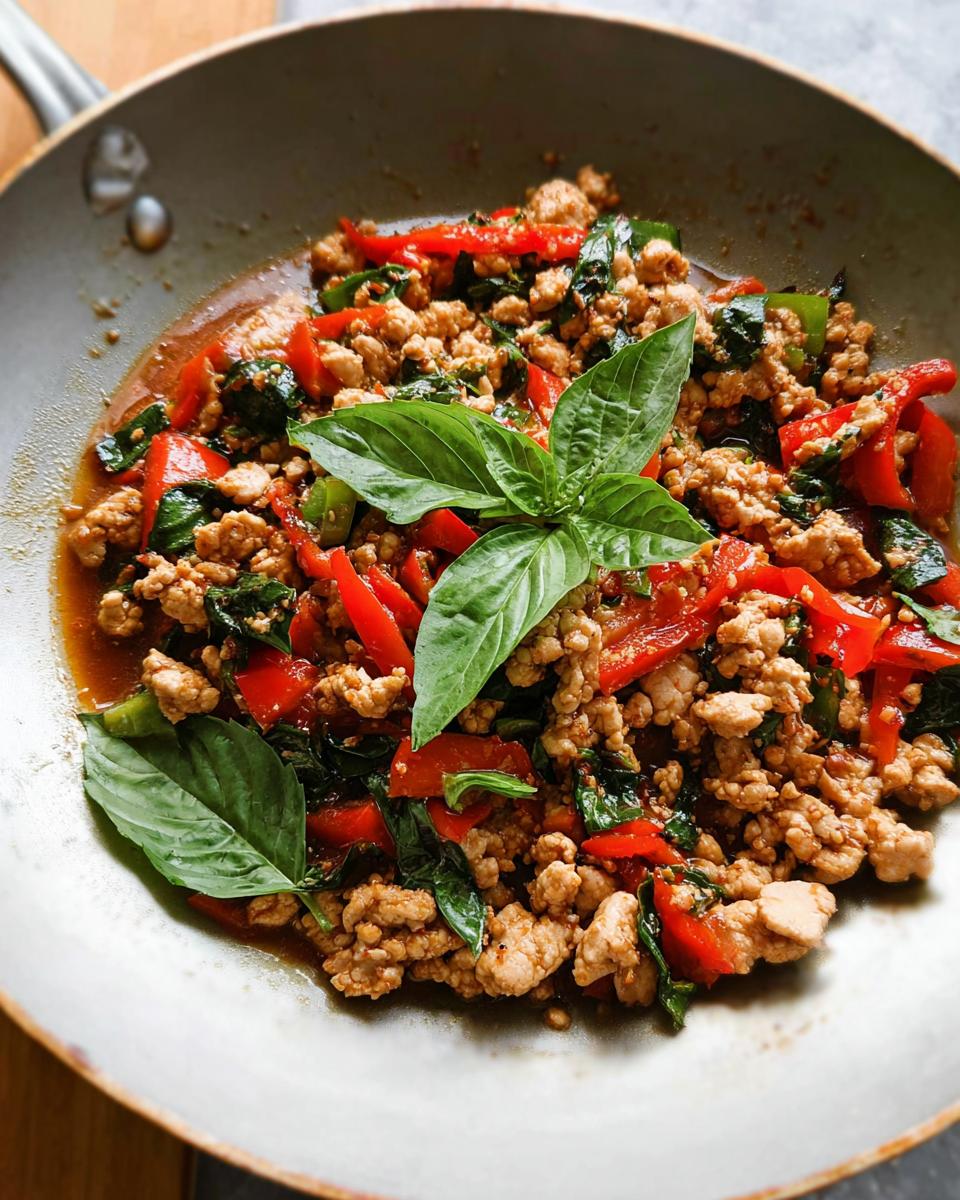
For the Stir-Fry:
- 2 tablespoons neutral oil (like vegetable or canola): This has a high smoke point, perfect for getting your pan nice and hot for a good sear.
- 2 shallots, thinly sliced: Shallots are milder and sweeter than yellow onions. If you can’t find them, use 1/2 of a small yellow onion.
- 4 cloves garlic, minced: Fresh is best. The pre-minced jarred kind just doesn’t have the same punch.
- 1 tablespoon fresh ginger, minced: Same rule as the garlic. That little knob of ginger in your fridge is your flavor friend.
- 1/2 red bell pepper, thinly sliced: This adds a sweet crunch and a pop of color.
- 1 pound ground chicken: I prefer ground chicken thigh for its richer flavor, but any ground chicken works. For diced chicken breast, cut into 1/2-inch pieces so they cook quickly.
- 2/3 cup fresh basil leaves: Thai holy basil has a spicy, anise-like flavor that’s authentic. Sweet Italian basil is more common and still delicious. Do not use dried basil.
For the Sauce:
- 2 teaspoons light brown sugar, packed: This balances the salty and spicy notes. You can use white sugar in a pinch.
- 1 tablespoon fish sauce: This is the umami backbone. Don’t skip it. It smells strong from the bottle but cooks into a deep, savory flavor.
- 1/4 cup low-sodium soy sauce: Using low-sodium lets you control the salt level better, especially since fish sauce is also salty.
- 1 tablespoon oyster sauce: It adds a thick, savory-sweet richness. For a vegetarian version, use mushroom or vegetarian oyster sauce.
- 1 to 1.5 tablespoons Asian chili garlic sauce or sambal oelek: This is your heat control. Start with 1 tablespoon and add more at the end if you want it spicier.
- 1/2 cup low-sodium chicken broth: This forms the base of the sauce. Vegetable broth works too.
- 1/4 cup water: Combined with the broth for the right amount of liquid to simmer.
- 1 teaspoon cornstarch: This is our thickener. It gives the sauce a glossy, cling-to-the-rice texture.
For Serving:
- Cooked Jasmine rice: The fragrant, slightly sticky rice is the classic partner and soaks up the sauce perfectly.
Once you have these items prepped and your sauce whisked together, you’re literally minutes away from a fantastic meal. Let’s get cooking.
How to Make Thai Basil Chicken
This is where the magic happens, and it happens fast. Stir-frying is all about having everything ready to go and cooking with confidence. Follow these simple steps for a perfect result every time.
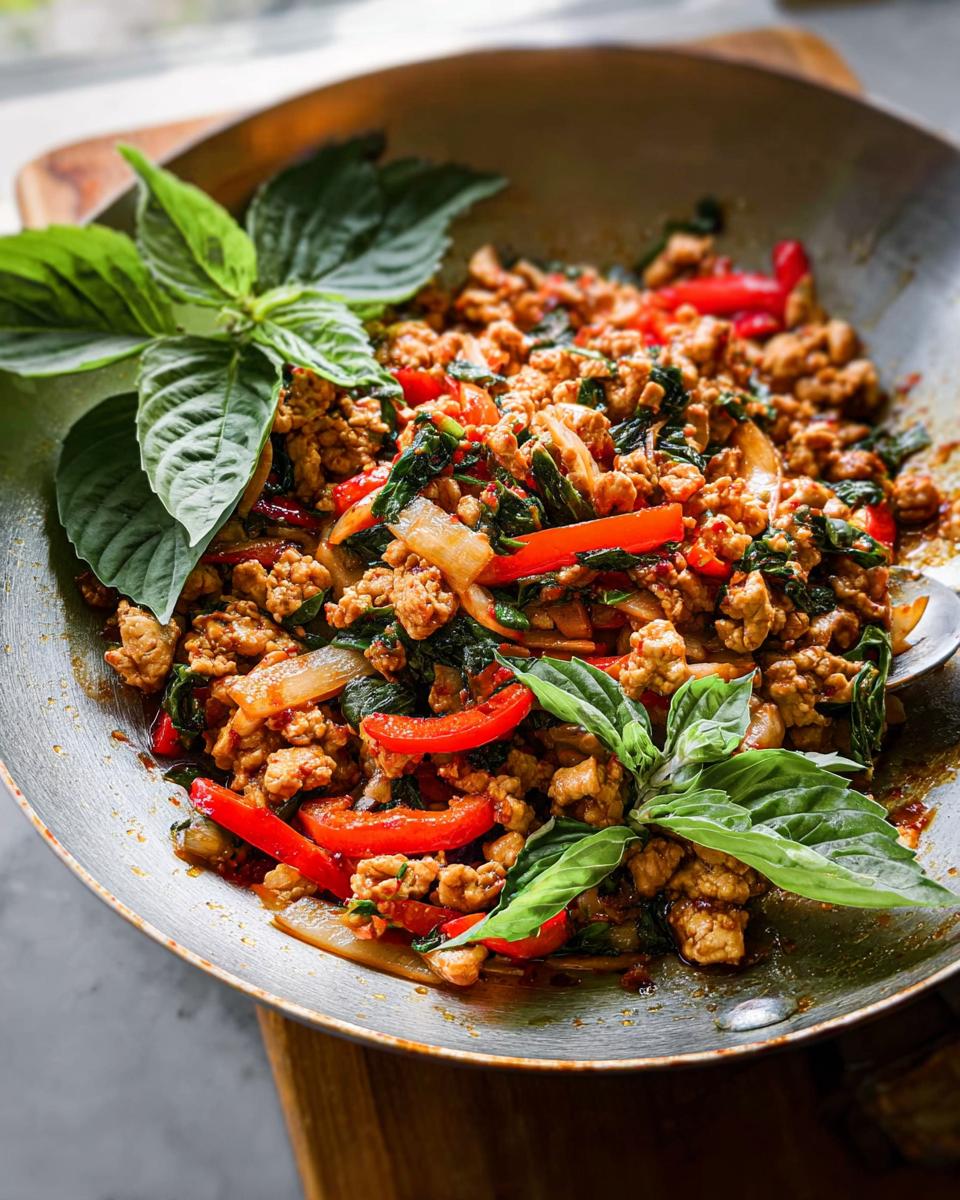
Step 1: Prep Your Ingredients and Sauce
First, get everything ready. This is called mise en place, and for a stir-fry, it’s the golden rule. Thinly slice your shallots and bell pepper. Mince the garlic and ginger. Measure your sauces. Now, grab a small bowl and make the sauce. Whisk together the brown sugar, fish sauce, soy sauce, oyster sauce, chili garlic sauce, cornstarch, chicken broth, and water.
Whisk it really well until the cornstarch is completely dissolved and the sugar has melted. This prevents lumps and scrambling later. With your sauce ready and veggies chopped, you’re set for a smooth cooking ride.
Step 2: Cook the Aromatics and Vegetables
Place your largest skillet or wok over medium-high heat. Add the oil and let it heat up until it shimmers and moves easily around the pan. This takes about 1 minute. Add the sliced shallots, minced garlic, and minced ginger all at once. They will sizzle immediately. Stir them frequently with a wooden spoon for about 2 minutes.
You’ll know they’re ready when your kitchen smells incredible and the shallots are just starting to soften. Don’t let the garlic brown. Now, add the sliced red bell pepper. Cook for another 2 to 3 minutes, stirring often, until the peppers are slightly tender but still have a bit of crunch.
Step 3: Brown the Chicken
Push all those fragrant veggies to the outer edges of the pan, creating a clear space in the center. Crank the heat up to high. Add the ground chicken right into that hot, empty space. Let it sit untouched for a full minute. This is the key to a flavorful sear, not steam. After a minute, use your spoon to break up the chicken. Continue cooking for 4 to 5 minutes, breaking it into small crumbles, until there is no pink left. You should see some nice browned bits on the chicken and the bottom of the pan.
Step 4: Simmer and Thicken the Sauce
Give your pre-made sauce a quick stir again. The cornstarch loves to settle at the bottom. Pour the sauce directly over the chicken and vegetables. Stir everything together, scraping up any of those tasty browned bits from the pan. Bring the mixture to a lively simmer. Let it bubble away for about 3 minutes, stirring occasionally. You’ll see the sauce transform from thin and watery to glossy and thick. It will coat the back of your spoon nicely. This is your sign that it’s ready.
Step 5: Finish with Fresh Basil
Turn off the heat. This step is crucial. Immediately add all the fresh basil leaves to the hot skillet. Gently stir them in, folding the wilted chicken and sauce over them. The residual heat from the dish will perfectly wilt the basil in about 30 seconds. This keeps its vibrant green color and fresh, peppery fragrance intact. If you cook the basil with the heat on, it turns black and loses its magic. Serve your Thai Basil Chicken right away, spooned over fluffy Jasmine rice.
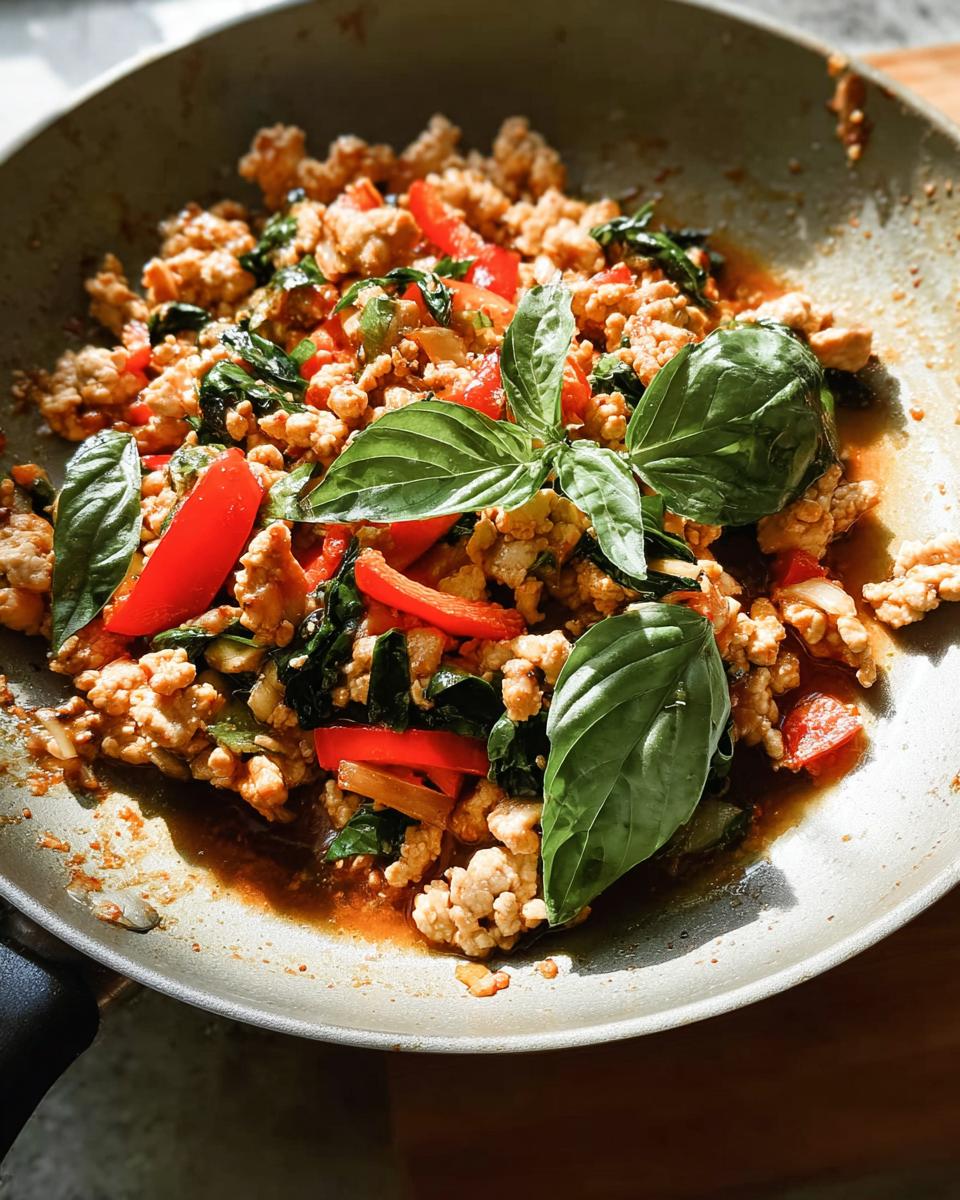
Pro Tips for the Best Thai Basil Chicken
These little tricks are what take this dish from good to “can we have this again tomorrow?” good. They’re the secrets I learned through all my testing.
- Get Your Pan Screaming Hot: A properly preheated skillet is non-negotiable. Wait until your oil shimmers and moves like water. This intense heat sears the chicken instantly, creating flavorful browning instead of a pale, steamed texture.
- Resist the Urge to Stir: When you add the chicken, let it be for a full minute. You want to hear a strong sizzle. This creates a fond, those tasty browned bits on the pan that dissolve into your sauce, adding deep flavor.
- Taste and Make It Yours: After the sauce thickens, dip a spoon in and taste. Want more sweet? Add a pinch of brown sugar. Need a bright kick? A squeeze of fresh lime juice balances the richness perfectly. This is your dish.
- Basil is a Finishing Touch: I learned this the hard way. Adding basil while cooking turns it black and bitter. Stir it in only after you turn off the heat. The residual warmth wilts it perfectly, preserving its color and peppery aroma.
- Fresh is Best for Aromatics: Bottled ginger and garlic simply don’t compare. That extra minute spent mincing fresh cloves and ginger root makes the entire kitchen smell incredible and builds a flavor foundation you can taste in every bite.
Follow these tips, and you’ll have a stir-fry that rivals your favorite takeout spot, right from your own stove.
Common Mistakes to Avoid
Stir-fries are forgiving, but avoiding these few common pitfalls will guarantee your Thai Basil Chicken turns out perfect. Here’s what to watch for.
- Adding Basil Too Early: Basil added during cooking wilts into a dark, bitter mush. Stir it in only after you’ve turned off the heat. The hot dish will wilt it perfectly in seconds, keeping its bright color and fresh flavor.
- Not Prepping First (Mise en Place): Once that pan is hot, there’s no time to chop. Measure your sauces, slice your veggies, and make your sauce mixture before you even turn on the stove. This prevents burning and scrambling.
- Using Cold Meat Straight from the Fridge: Ice-cold ground chicken will steam and release too much water when it hits the hot pan. Let it sit out for 10-15 minutes to take the chill off. This helps it sear and brown beautifully.
- Skipping the Sear on the Chicken: The moment you add the chicken, resist stirring. Let it sit untouched for a full minute to develop a flavorful, brown crust. If you stir immediately, you’ll steam it and miss out on that deep, savory flavor.
Keep these simple tips in mind, and you’ll avoid the usual stir-fry frustrations. Your dish will be bursting with flavor and have the perfect texture every single time.
Delicious Variations
One of my favorite things about this Thai Basil Chicken recipe is how easily it adapts. It’s a fantastic base for using what you have. Here are some of my favorite twists that work perfectly.
- Protein Swap: Ground pork is a classic and delicious alternative with a slightly richer flavor. Ground turkey works great for a leaner option. For a quicker cook, use peeled, medium shrimp and add them in the last 2-3 minutes of cooking until pink and opaque.
- Vegetarian Twist: Crumble firm or extra-firm tofu into the pan instead of chicken, pressing it with your spoon to help it brown. A mix of sliced shiitake and oyster mushrooms also creates a wonderfully meaty texture. Just remember to swap the chicken broth for vegetable broth.
- Extra Veggies: Toss in a handful of fresh green beans, snap peas, or small broccoli florets with the bell pepper. For carrots, slice them into thin matchsticks so they cook quickly. You may need to add an extra splash of broth if adding a lot of veggies.
- Spice Level: For a very mild dish, start with just 1 teaspoon of chili garlic sauce. If you love serious heat, add one or two thinly sliced Thai bird’s eye chilies to the aromatics in Step 2. Their heat is intense, so a little goes a long way.
Don’t be afraid to play with these ideas. This recipe is built to handle a little creative freedom.
Serving Suggestions
This Thai Basil Chicken is incredibly versatile. While it’s a complete meal on its own, how you serve it can turn a simple dinner into something special. Here are my favorite ways to enjoy it, from a busy Tuesday to a relaxed weekend.
- Classic & Perfect: Spoon it hot over a big bowl of fluffy, steamed Jasmine rice. The fragrant, slightly sticky rice is the ideal partner, soaking up every last drop of that glossy, savory sauce. This is how we eat it 90% of the time.
- For a Lighter Meal: Serve it over cauliflower rice for a low-carb option, or scoop it into crisp butter lettuce or romaine leaves to make fresh, handheld lettuce cups. It’s a fun, interactive way to eat that feels a bit lighter.
- Complete Thai Spread: For a weekend feast or when friends come over, pair it with a quick cucumber salad (sliced cucumbers, red onion, rice vinegar, and a pinch of sugar) and some store-bought or homemade spring rolls. It feels like a restaurant meal at home.
- Quick Lunch Hero: This dish reheats like a dream. Pack the leftovers for lunch and reheat gently in the microwave with a splash of water. The flavors meld and deepen overnight, making it possibly even better the next day.
No matter how you plate it, just make sure you have plenty of sauce. That’s the best part.
FAQs About Thai Basil Chicken
Can I use dried basil?
No, I don’t recommend it. Dried basil lacks the fresh, peppery punch this dish needs. It will taste dusty and flat. If you can’t find fresh basil, swap in fresh cilantro or sliced green onions at the very end for a different but still delicious finish.
How do I store and reheat leftovers?
Store cooled leftovers in an airtight container in the fridge for up to 3 days. Reheat gently in a skillet over medium-low heat with a tiny splash of water or broth to loosen the sauce. You can also microwave it in 30-second intervals, stirring between each.
Is this recipe gluten-free?
It can be, with two simple swaps. Use tamari or a certified gluten-free soy sauce. Also, check your oyster sauce label for a gluten-free certification. All other ingredients, like fish sauce and fresh produce, are naturally gluten-free.
What are the nutrition facts?
One serving of this Thai Basil Chicken (without rice) is approximately 280-300 calories. This is an estimate. For exact counts, use a nutrition calculator with your specific brand of ingredients, as sauces and chicken fat content can vary.
Can I freeze it?
Yes, you can freeze it. Portion it into airtight containers and freeze for up to 2 months. Thaw overnight in the refrigerator before reheating. The fresh basil will lose its vibrant texture, but the overall flavor of the dish will still be wonderful.
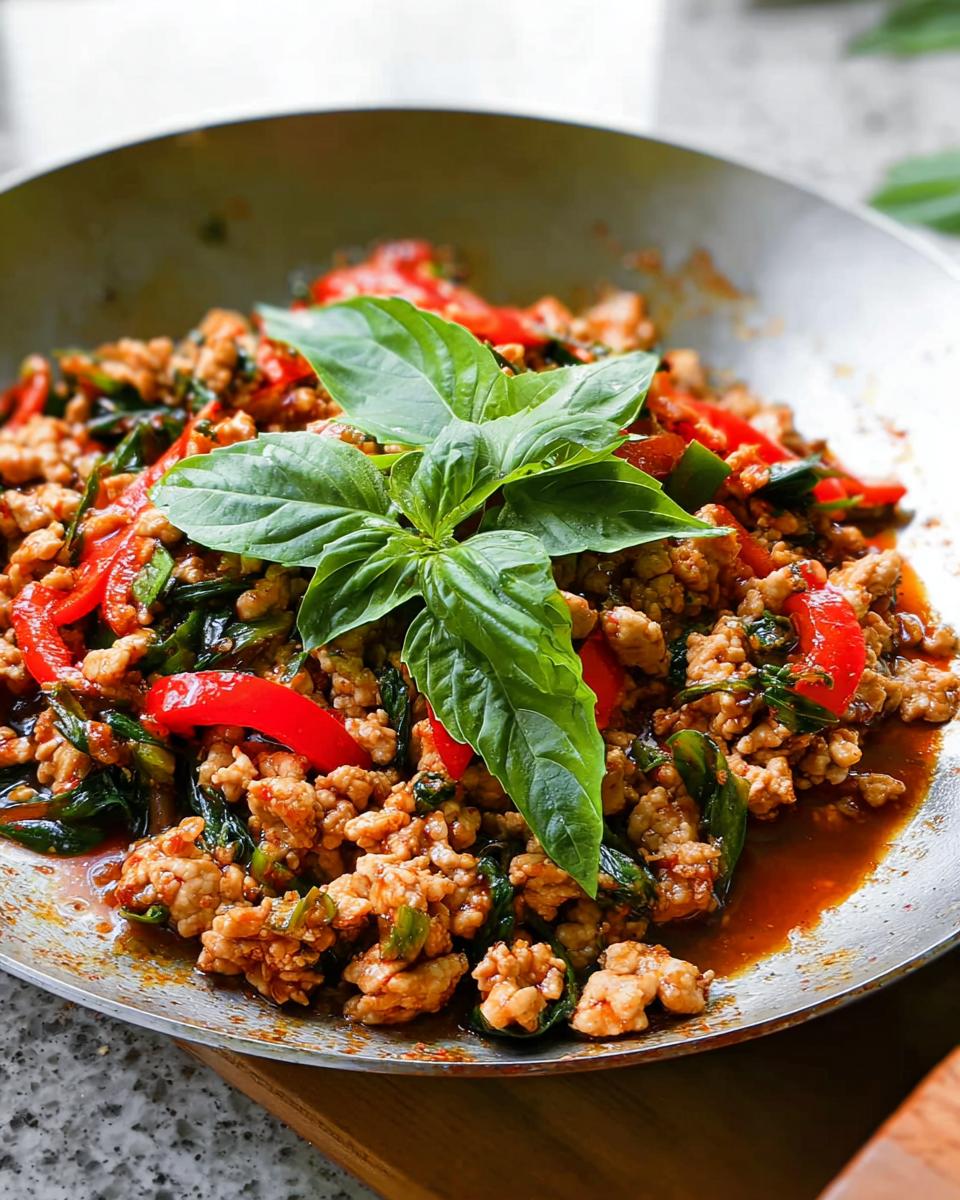
Your New Go-To Weeknight Stir-Fry
This Thai Basil Chicken proves you don’t need hours or fancy skills for incredible flavor. It delivers a savory, spicy, and sweet meal with minimal effort and maximum reward. I hope this recipe becomes a trusted favorite in your kitchen, just like it is in mine.
Give it a try tonight. I would love to hear how it turns out for you. Share your results in the comments below. If you loved it, pin this recipe to your weeknight dinner board. Follow me on Pinterest for more quick, family-friendly meals that never sacrifice taste. Happy cooking.
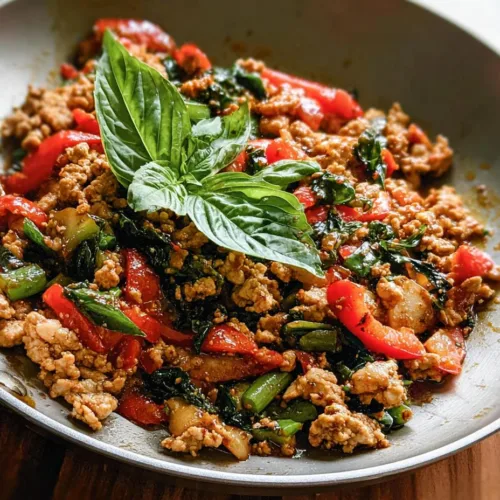
Thai Basil Chicken Stir-Fry
Equipment
- Large skillet or wok
- Small bowl
Ingredients
For the Stir-Fry
- 2 tbsp neutral oil like vegetable or canola
- 2 shallots thinly sliced
- 4 cloves garlic minced
- 1 tbsp fresh ginger minced
- ½ red bell pepper thinly sliced
- 1 pound ground chicken or diced chicken breast
- ⅔ cup fresh basil leaves
For the Sauce
- 2 tsp light brown sugar
- 1 tbsp fish sauce
- ¼ cup low-sodium soy sauce
- 1 tbsp oyster sauce
- 1 to 1.5 tbsp Asian chili garlic sauce or sambal oelek adjust to your spice preference
- ½ cup low-sodium chicken broth
- ¼ cup water
- 1 tsp cornstarch
For Serving
- Cooked Jasmine rice
Instructions
- Heat the oil in a large skillet or wok over medium-high heat until shimmering. Add the sliced shallots, minced garlic, and minced ginger. Cook, stirring frequently, for about 2 minutes until fragrant and lightly softened. Add the sliced bell pepper and continue to cook for another 2–3 minutes until slightly tender.
- Push the cooked vegetables to one side of the skillet. Increase the heat to high and add the ground chicken. Break up the chicken with a spoon and cook until it is no longer pink and is well browned, about 4–5 minutes.
- While the chicken cooks, whisk together the brown sugar, fish sauce, soy sauce, oyster sauce, chili garlic sauce, cornstarch, chicken broth, and water in a small bowl. This creates your sauce base.
- Pour the sauce mixture into the skillet with the chicken and vegetables. Bring the sauce to a simmer, stirring constantly, and cook for about 3 minutes, or until the sauce has thickened slightly.
- Stir in the fresh basil leaves. Cook for just 30 seconds more, or until the basil is wilted and fragrant.